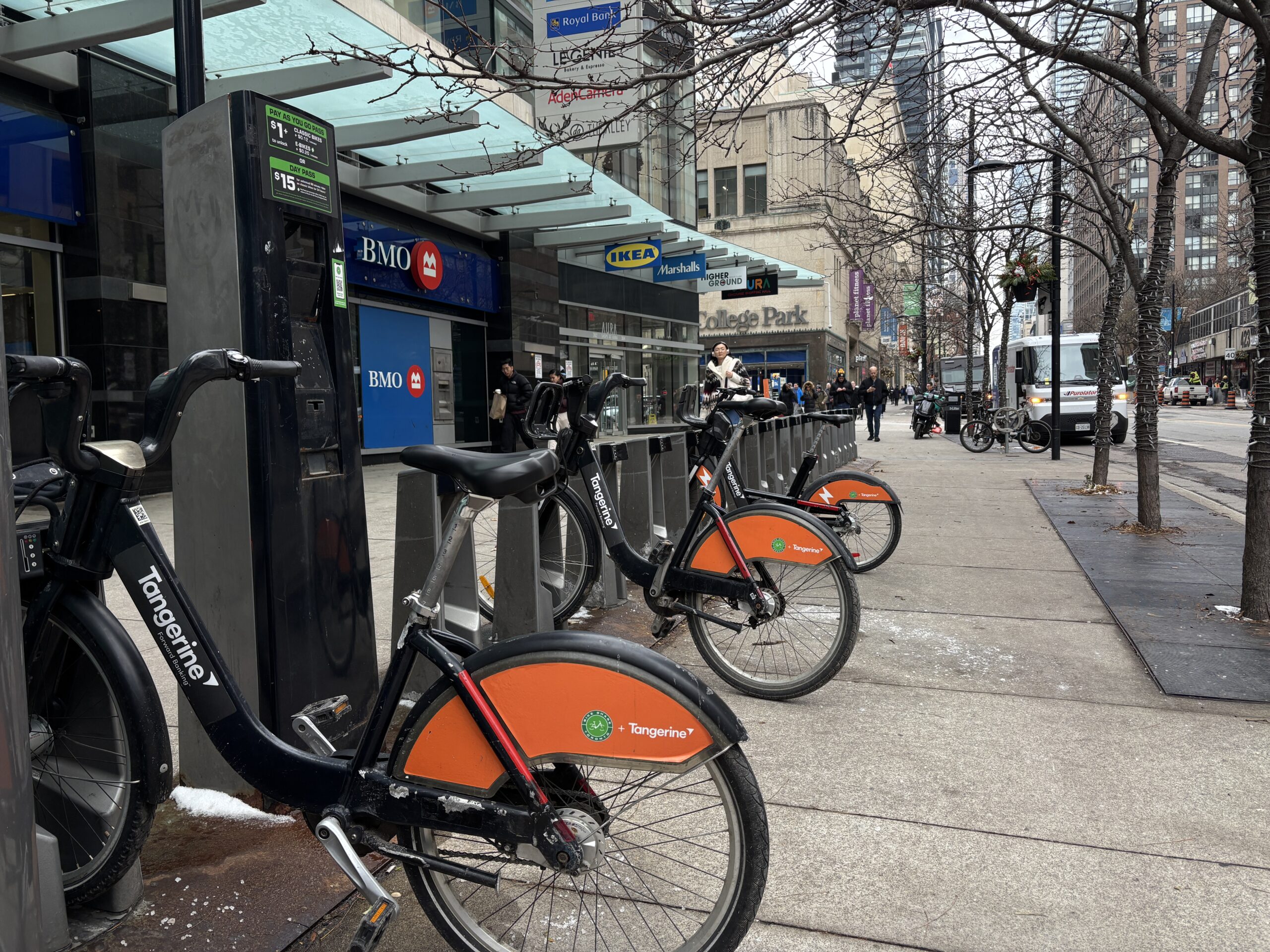
After a major expansion year, Bike Share Toronto looks to strengthen high demand areas and reach underserved neighbourhoods.
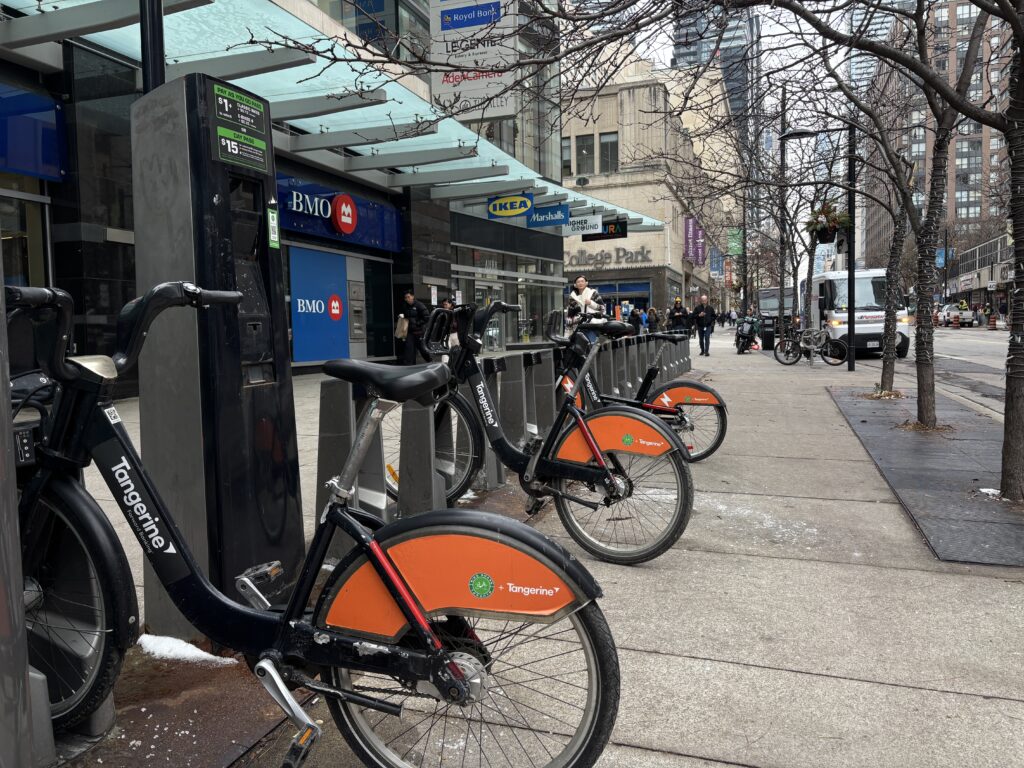
On Nov. 24, Bike Share Toronto held an online public forum to share progress on its recent expansion and to present its newest plan for the next four years.
The session began with a review of Bike Share’s four-year growth plan. According to Bike Share Toronto’s website, the service makes navigating Toronto more accessible with over 1,000 bike rental stations across the city.
In 2025, Bike Share expanded to all 25 wards. They increased bikes from 7,165 to over 10,000 across the network, and the number of stations.
“This year alone was one of the biggest expansion years ever with the addition of 180 new stations to the network,” said Ashleigh Berger, acting director for Bike Share Toronto.
Other key milestones for Bike Share Toronto include expansion into the Toronto Islands. Berger said the Centre Island station has become the busiest station in the entire Bike Share Toronto network. Thirty-three per cent of all new riders this year used the service for the first time on the Islands, said Berger.
Bike Share Toronto said new pillar docks have been added around the city to help reduce maintenance needs and promote higher customer satisfaction.
At the moment, Bike Share Toronto is studying a PRESTO payment integration plan. However, Berger said they are “currently undertaking a feasibility study to evaluate the possibility” of the integration.
In the forum, the team said Bike Share Toronto lowered age requirements for bike usage. For classic bikes, the age has dropped from 16 to 14 while for e-bikes, the age has gone down from 18 to 16. It has also expanded the student discount program to more post-secondary institutions.
For the future, Bike Share Toronto is shifting from focusing on city-wide expansion strategies to finding ways to strengthen existing services where ridership is most concentrated.
Berger said Bike Share Toronto seeks to strengthen first and last mile connections to the TTC, GO Transit and LRT. It will also “enhance access to parks, trails and attractions [while] improving operations” and expand “the service to communities facing mobility barriers,” said Berger.
This will optimize the existing network’s performance and reduce rebalancing demands, said Berger. She said they will also expand charging infrastructure to improve efficiency.
Bike Share Toronto is also exploring a “bike angel” program, said Berger. A bike angel program is a reward system that promotes taking bikes from overcrowded stations and relocating them to locations in need.
Stephen Tam, transportation planner at Mott Macdonald and consultant for Bike Share, said the 2030 strategy includes expanding access into equity-deserving neighbourhoods. Mott Macdonald is a management, engineering and development consultancy.
Tam shared a ridership analysis that assessed where Bike Share works best in the city. He said demand is highest in the downtown core. He said the program is most useful for travel with stations 800 metres to two kilometres away from major transit stops, where biking is faster than walking.
The team received over 100 questions for the Q&A portion of the meeting. Some questions centred on Bike Share Toronto’s approach to bike rebalancing, while other meeting attendees wanted to know how to get access to the meeting slides.
The Bike Share team specified that the information from reports and the slides from the presentation will not be shared after the meeting. With regard to rebalancing, Berger said the next strategy focuses on operational efficiency while the last four years focused on expansion.
Since time was limited, not all questions could be answered. Staff encouraged riders to contact customerservice@bikesharetoronto.com with feedback or to request stations.
Bike Share Toronto also outlined next steps, which include presenting its plan to the Toronto Parking Authority board and, later, City Council for approval.
Key takeaways
- Bike Share held a public forum reviewing its four-year growth plan and its 2030 strategy. According to Bike Share Toronto’s website, the service makes navigating Toronto more accessible with over 1,000 bike rental stations across the city.
- Bike Share Toronto is shifting from focusing on city-wide expansion strategies to finding ways to strengthen existing services where ridership is most concentrated.
- Bike Share Toronto said new pillar docks have been added around the city to help reduce maintenance needs and promote higher customer satisfaction.
- Bike Share Toronto is considering a possible PRESTO integration system for bike rentals.
On-the-ground observations from our documenter
Rushil Malik
Documenter Rushil Malik recently moved to Little Italy in 2024 and became an avid user of the Toronto Bike Share program in April 2025. With the annual membership, she saved almost $300 in TTC fare in just six months, compared to her TTC spending in 2024. Rushil said a 12 month pass for the TTC can range from $1,409.40 for youth and seniors and $1,716 for adults. In comparison, an annual Bike Share membership ranges from $105 to $120 a year — a fraction of the cost.
She said many of her neighbours in Little Italy enjoy the Bike Share program, either through the annual pass or as casual riders. Although there are many docking stations in Little Italy, the busiest ones are often empty weekday mornings from 8 a.m. to 1 p.m. Other times, in the evenings, the docks are too full, so people are unable to dock their bikes, and have to find a different station.
While Bike Share is generally reliable, neighbours have found it frustrating to run late due to malfunctioning bikes, a lack of bikes or full docks.
Rushil thinks the expansion to add more bikes and stations will greatly benefit riders in the area. Especially those using the program to and from work.
Rouaida Nassif
Documenter Rouaida Nassif has lived in Mississauga since 2018 and often travels to Toronto. After enrolling in Toronto Metropolitan University, affordable transit within the city became a priority.
Adult TTC subway prices are $3.35 and a post-secondary monthly pass costs $156. In comparison, the yearly student membership for Bike Share Toronto ranges from $84 to $96. Managing transportation costs for students is difficult due to paying high rent prices, living expenses and course textbooks.
Rouaida thinks using Bike Share Toronto can dramatically decrease transportation costs for all students, especially out-of-city commuters. But she says one issue with Bike Share is e-bikes with little to no battery due to slow charging. Poorly charged e-bikes are unreliable for any travel within the city.
Her friend once used an e-bike that ran out of battery during their trip. They had to walk their e-bike to the nearest charging station while continuously paying by the minute.
Aria Ipe
Documenter Aria Ipe, a Brampton local who often commutes to Toronto for work and school, observed strong enthusiasm at the Bike Share public forum for integrating PRESTO with the Bike Share system.
She was interested in the idea raised during the Q&A about the “Bike Angels” program, which would reward riders for helping rebalance bikes and was acknowledged by TPA staff as something they may explore.
From personal observation and online community discussions, such as Reddit threads, Aria says some Toronto residents express frustrations with bikes being left scattered around the city, riders not following road rules and concerns about city funding going toward maintaining and expanding the system.
Similarly, in Brampton, Aria sees e-scooters frequently used on sidewalks and left around the city, frustrating many pedestrians and drivers who sometimes struggle to see them due to their speed.
As a commuter to Toronto who doesn’t drive, an increase in e-bikes and stations would be of interest to Aria since it could make getting around the city easier and faster.
Want to know more? Check out what The Green Line has to say about it.
CHECK YOUR FACTS
Documenters:

Notes produced by Aia Jaber

Meeting documented by Rushil Malik

Meeting documented by Rouaida Nassif

Meeting documented by Aria Ipe
VIDEO SHORTS:
For more information, you can access The Green Line‘s story and video.